
What does reward apps tracking actually mean?
Reward apps tracking is the technical system that connects your initial click on an offer to your completed action, proving you deserve credit for that specific task.
Imagine handing someone a numbered ticket when they enter a store, then asking them to show that same ticket at checkout. If they lose the ticket, switched stores, or someone else takes it, you can't verify they were the original customer. Digital tracking works the same way, except the "ticket" is invisible data traveling with you.
The system needs three things to work:
Click registration: Recording when and what you clicked
Session preservation: Keeping your unique identifier active throughout the task
Confirmation signal: Receiving proof from the advertiser that you completed everything
When any of these three steps fails, the entire tracking chain collapses.
How does reward app technology actually work behind the scenes?
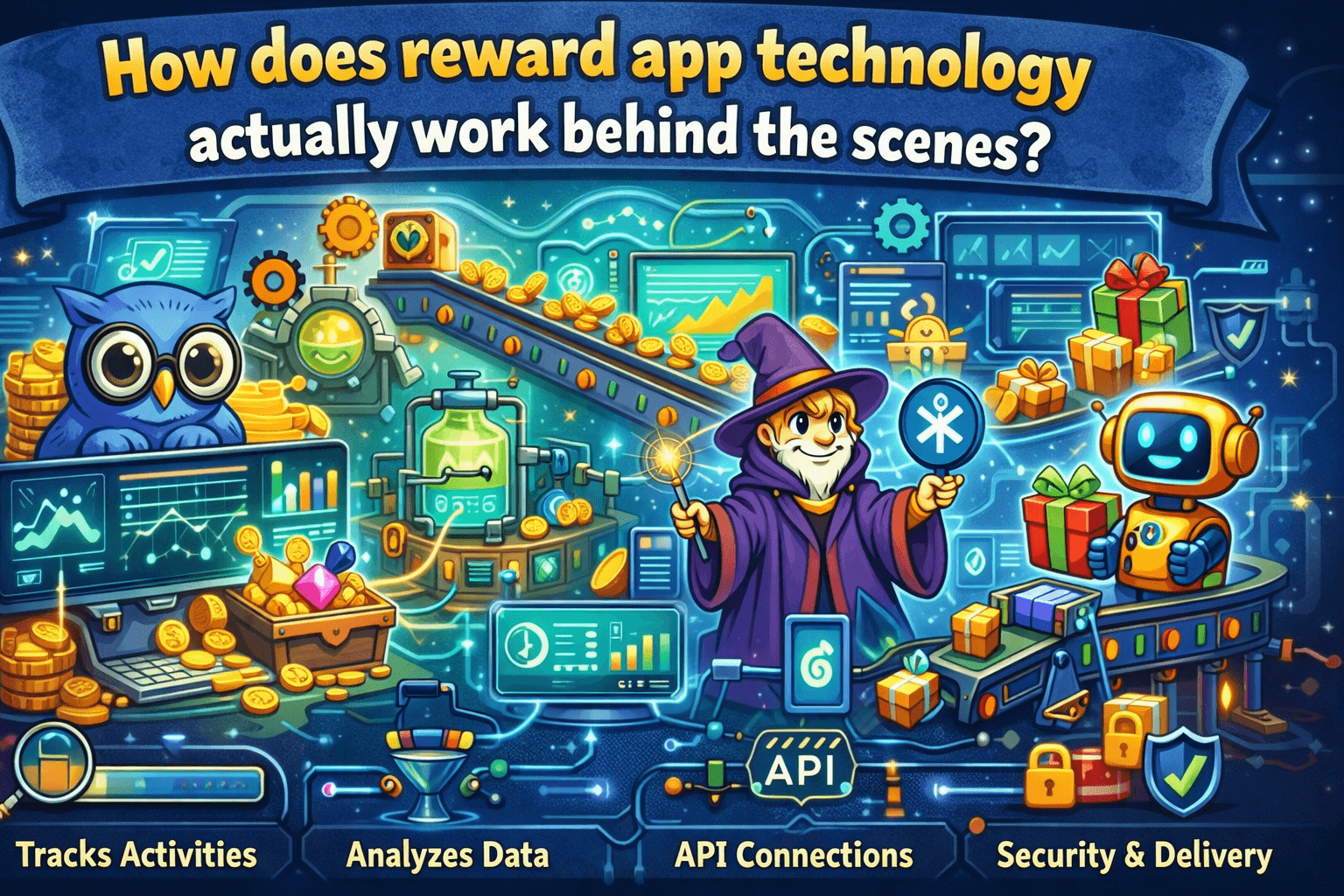
Understanding the technical flow helps you protect it. Here is what happens during a successful tracking session:
Step 1: Offer click creates your unique ID
The moment you tap an offer, the platform generates a tracking token, a string of random characters tied to your account. This gets embedded in the redirect URL or passed through a mobile attribution SDK.
Step 2: Your device stores tracking data
For web offers, tracking parameters get saved in cookies or browser storage. For app installs, the data flows through attribution partners like AppsFlyer, Branch, or Adjust, which store it server-side and match it to your device fingerprint.
Step 3: You complete the required action
While you shop, sign up, or reach a game level, the advertiser's systems monitor specific events. For purchases, they track cart activity and payment completion. For apps, they track install confirmation and in-app milestones.
Step 4: Advertiser sends conversion signal
After you finish, the advertiser's platform fires a postback, a server-to-server notification telling the reward app: "User with tracking token ABC123 completed the requirement." This happens behind the scenes; you don't see it.
Step 5: Validation and crediting
The reward platform receives the signal, matches it to your account, runs fraud checks, and marks your task as complete. This is where the reward verification process occurs, which can take anywhere from minutes to months depending on the offer type.
Key rule: Your tracking identifier must remain unchanged and traceable from step 1 through step 4. Any break in that chain, no matter how small, prevents the final matching.
Why rewards didn't track: The most common reasons
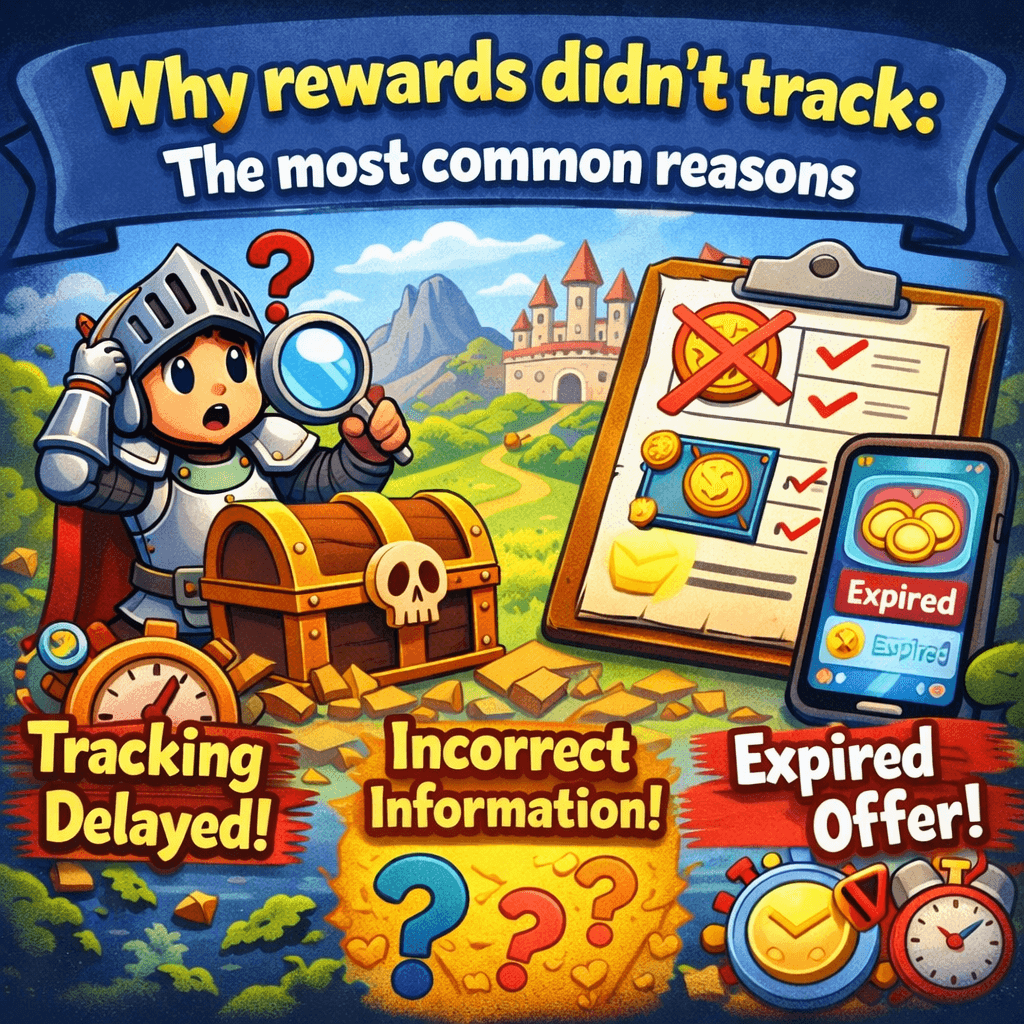
Tracking failures frustrate users because you did everything right from your perspective. But "doing the task" and "proving you did it through the tracking system" are two different things. Here's what typically goes wrong:
- App switching interrupted the session: You clicked an offer in the reward app, it opened your browser, but you switched to check messages, and iOS closed the browser tab to save memory.
- Privacy features blocked identifiers: Safari's Intelligent Tracking Prevention, Firefox's Enhanced Tracking Protection, or Chrome's third-party cookie blocking prevented tracking data from being stored.
- Multiple sources claimed the same conversion: You clicked the reward app offer, but also had a browser extension or visited through a search ad, creating competing claims for the same purchase.
- Device change mid-session: You clicked on your phone during lunc,h but completed the purchase on your home computer that evening.
- Attribution window expired: You clicked the offer but waited too long before completing it, exceeding the campaign's tracking timeframe (often 24-72 hours).
- Ad blocker interference: Extensions like uBlock Origin or Privacy Badger blocked the tracking scripts from loading entirely.
- Incomplete task requirements: You thought you finished but missed a crucial step like email verification, account activation, or reaching the minimum purchase threshold
Real scenario: The return visit problem
You click a shopping offer in your reward app. The retailer's site loads, but you are not ready to buy yet, so you close it. Two days later, you remember and manually type the retailer's URL into your browser. You complete your purchase, but since you didn't use the tracking link the second time, no conversion fires. The system sees a purchase from your email address, but can't connect it to your original click.
What causes cashback tracking problems in the USA specifically?
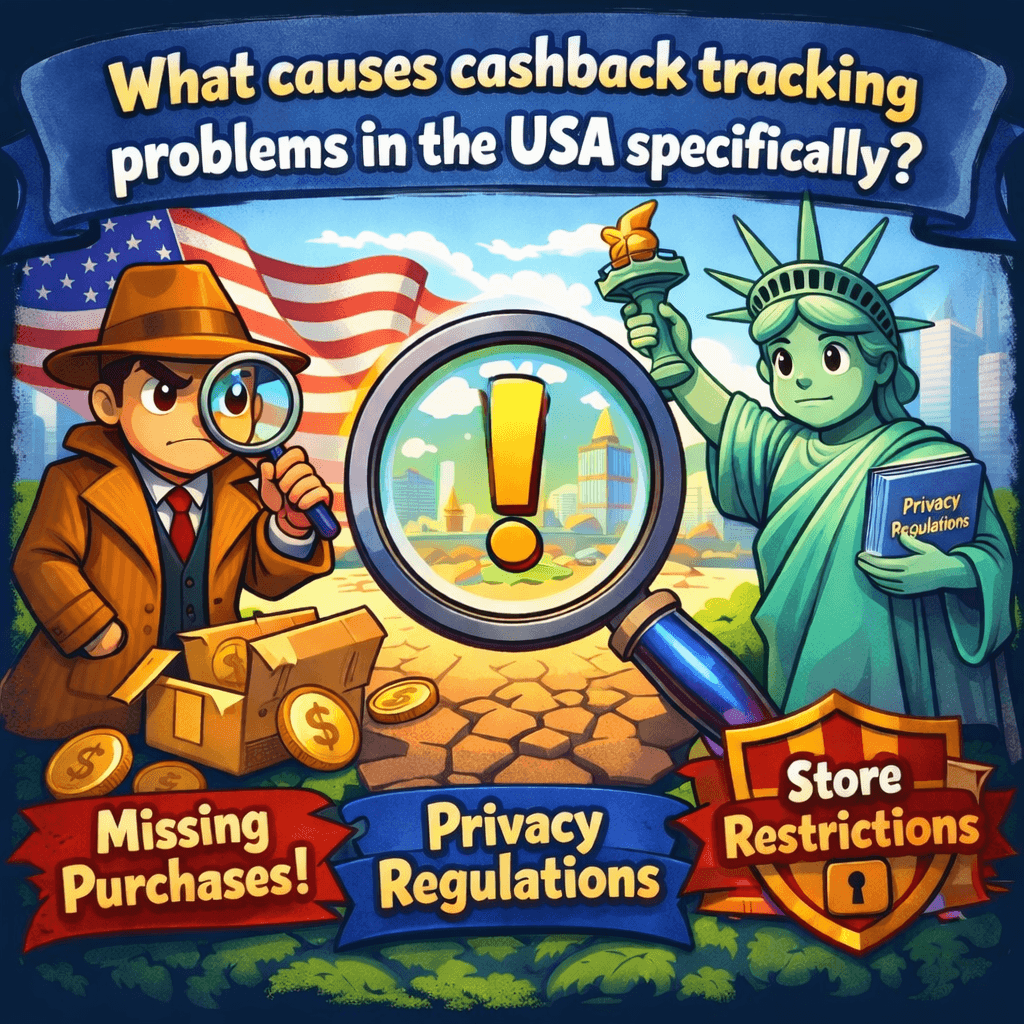
While tracking challenges exist everywhere, certain factors create unique issues for US users:
State-level privacy laws
California's CCPA, Virginia's CDPA, and similar laws in Colorado, Connecticut, and Utah give residents the right to opt out of data sales. When users exercise these rights, tracking becomes significantly harder. Reward apps must respect these preferences even though it reduces attribution accuracy.
iOS dominance in higher-income demographics
The US has higher iPhone market share than most countries. Apple's App Tracking Transparency (ATT) framework requires apps to request permission for tracking, and roughly 75% of US users decline. This forces reward apps to rely on less accurate probabilistic matching instead of device IDs.
Payment method diversity
Americans use everything from credit cards to PayPal, Venmo, Apple Pay, Buy Now Pay Later services, and retailer-specific payment methods. Some checkout flows don't properly pass tracking data when using certain payment options, particularly newer fintech solutions.
Higher fraud detection thresholds
US advertisers face more sophisticated fraud attempts than many markets, leading to stricter validation. Legitimate users sometimes get caught in fraud filters if their behavior pattern resembles fraudulent activity (like using gift cards exclusively or making many returns).
Warning: Using VPN services to access location-specific offers almost always triggers fraud detection. Advertisers compare your IP location to your shipping address and payment method location, mismatches raise red flags.
How long do tracking delay reward apps typically take?
Expectation management matters. Here's what "normal" looks like:
Why validation takes so long for purchases:
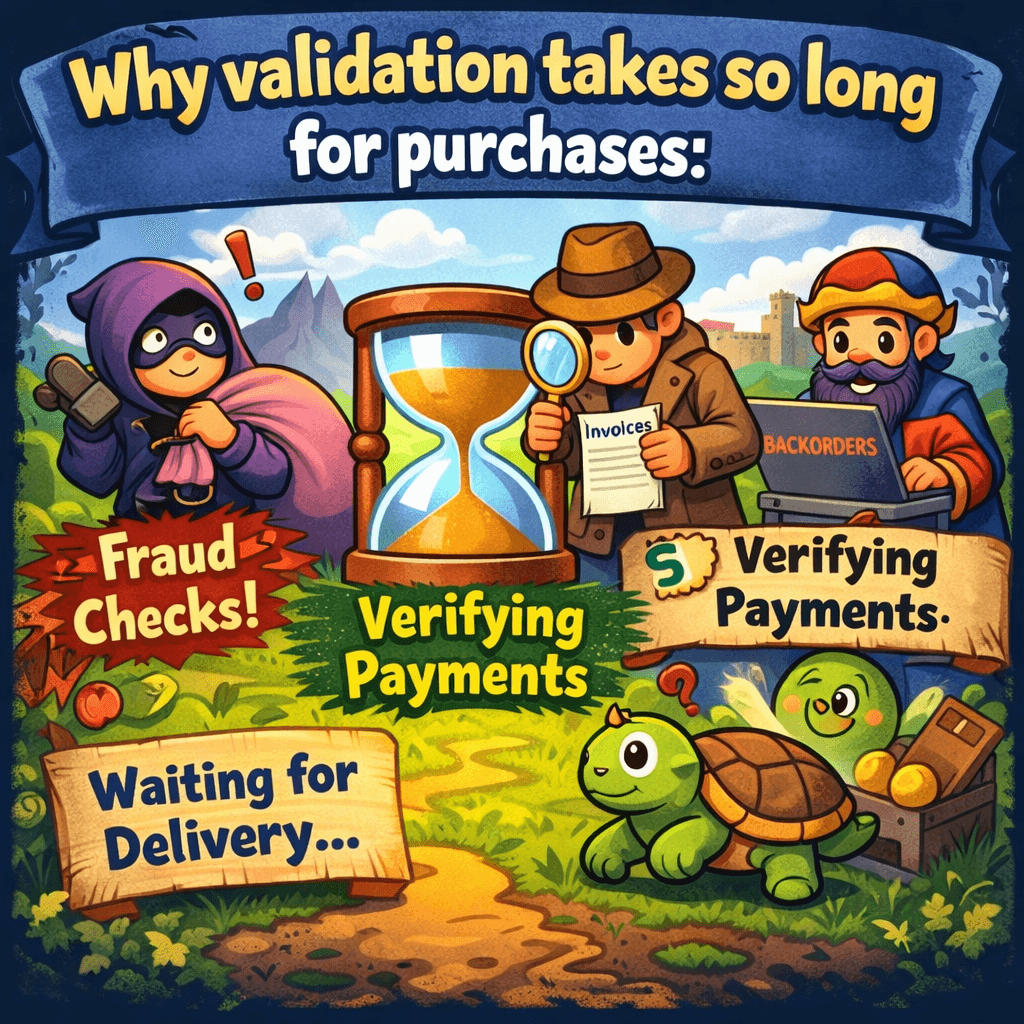
- Return windows: US retailers typically allow 30-90 day returns. Advertisers won't pay out until that window closes and they're certain you kept the item.
- Fraud review periods: Financial services and high-value offers undergo manual review for suspicious patterns.
- Payment processing delays: The advertiser must receive payment from their payment processor before they'll confirm conversions to reward platforms.
- Subscription validation: Trial offers require confirmation you didn't cancel immediately after signing up.
- Common mistake: Assuming "Tracked" status means "Approved." Tracked simply means the system recorded your click and saw some activity. Approval requires full validation of completion and compliance with offer terms.
Common mistake: Assuming "Tracked" status means "Approved." Tracked simply means the system recorded your click and saw some activity. Approval requires full validation of completion and compliance with offer terms.
How to avoid missing cashback rewards: The complete checklist
Before clicking any offer:
- Disable browser extensions: Turn off ad blockers, privacy tools, coupon finders, and password managers that might interfere.
- Check your privacy settings: Temporarily disable tracking prevention in Safari, Firefox's Enhanced Tracking Protection, or Chrome's privacy sandbox.
- Close competing tabs: Don't have the same retailer open in other tabs or windows.
- Verify your internet connection: Use your home wifi, not public networks that might inject code or use proxies.
- Read the full offer terms: Note minimum purchase amounts, excluded categories, required new customer status, or geographic restrictions.
During the tracking session:
- Stay in the session: Don't switch apps, close tabs, or navigate away until you have completed the entire checkout.
- Accept cookies: Click "Accept All" on cookie banners (you can clear them afterward).
- Don't search for coupons externally: Only use codes provided within the reward app's offer details.
- Complete the task immediately: Don't click the offer to "save it for later", attribution windows are short.
- Avoid browser back button: If you need to change something, proceed forward through the flow.
After completion:
- Take screenshots: Capture the confirmation page, order number, and any success messages.
- Save confirmation emails: Keep these until the reward credits (or well past that point if possible).
- Don't immediately clear data: Wait at least 48 hours before clearing cookies or browser cache.
- Check back within the expected timeframe: Most issues are caught early if you monitor during the pending period
What should I do when my reward doesn't track?
Immediate response (within 24 hours):
Don't panic. Most "missing" rewards are actually just pending and will appear within the advertiser's stated timeline. Check these first:
- Did you receive a confirmation email from the advertiser? (proves task completion).
- Does the reward app show the offer as "Tracked" or "Pending"? (means initial signal worked).
- Did you meet all the requirements listed in the offer terms? (minimum purchase, new customer, etc.).
- Are you still within the expected crediting window? (refer to timeline expectations)
If past the crediting window (after expected date):
Step 1: Gather evidence
- Screenshot of the original offer terms from the reward app showing the task and payment amount.
- Order confirmation email or screenshot with order number and date.
- Receipt or invoice showing the transaction amount.
- Screenshot showing your current reward balance and history
Step 2: Submit a detailed support ticket Include these specific details:
- Your user ID within the reward app.
- Exact date and approximate time you clicked the offer.
- Exact date and time you completed the task.
- Order number or confirmation code from the advertiser.
- Description of your tracking session (device used, whether any interruptions occurred).
- All documentation attached.
Step 3: Be patient but persistent
- Manual reviews typically take 5-14 business days.
- Some advertisers reject manual credit requests regardless of evidence (check platform policies).
- If denied initially, you can often appeal with additional documentation.
- Remain professional in all communication, support teams have limited control over advertiser decisions
Your Personalized If/Then Decision Tree:
- If the reward shows "Tracked," → Wait the full validation period before contacting support; tracking confirmation means the initial signal worked.
- If you used a coupon code from outside the app → Tracking likely failed because external coupon sites use their own affiliate links that override the reward app.
- If you completed the task on a different device than where you clicked, → Manual credit is unlikely unless the advertiser supports cross-device tracking.
- If you have previous successful offers with the same advertiser, → Mention this in your ticket as evidence of your legitimate user pattern.
- If multiple offers didn't track in succession → The issue might be your device/browser configuration rather than individual offer problems.
Final thoughts on protecting your rewards
The technology behind reward apps tracking has become increasingly sophisticated, but it's also fighting against equally sophisticated privacy protections built into modern devices and browsers. This creates a natural tension, users want privacy, but tracking requires data persistence.
Your role in this system is to consciously create a "tracking-friendly" environment during the specific moments you are completing offers. This doesn't mean permanently disabling privacy features, just temporarily lowering barriers for the 5-15 minutes it takes to complete a task, then restoring your preferred settings afterward.
The platforms with the best success rates share one characteristic: users who understand and actively protect the tracking process. Technical improvements help, but user behavior remains the single biggest factor in whether rewards are credited successfully. Every extra step you take to ensure clean tracking, disabling blockers, staying in session, and documenting completion directly translates to more consistent rewards.
