
What does it mean when your reward app account gets banned?
A reward app account ban is the permanent or temporary removal of your access to a platform's services, including the forfeiture of pending rewards and the inability to create new accounts using the same identity information.
Account restrictions exist on a spectrum:
- Soft restriction: Certain features disabled (like withdrawals or new offers) while under review.
- Temporary suspension: Full account freeze lasting days to weeks during investigation.
- Permanent ban: Complete loss of access with no ability to recover funds or create new accounts.
- Device/IP ban: Your hardware or internet connection gets blacklisted, preventing new account creation even with different emails.
- When platforms ban accounts, they rarely provide detailed explanations. This protects their fraud detection methods from being reverse-engineered by actual fraudsters, but it frustrates legitimate users who genuinely don't understand what they did wrong.
Critical rule: Most reward platforms explicitly state in their terms of service that they can terminate accounts "at their sole discretion" without prior notice or detailed explanation. You typically have no legal recourse unless you can prove discriminatory practices or contractual violations.
Why do reward apps ban users in the first place?
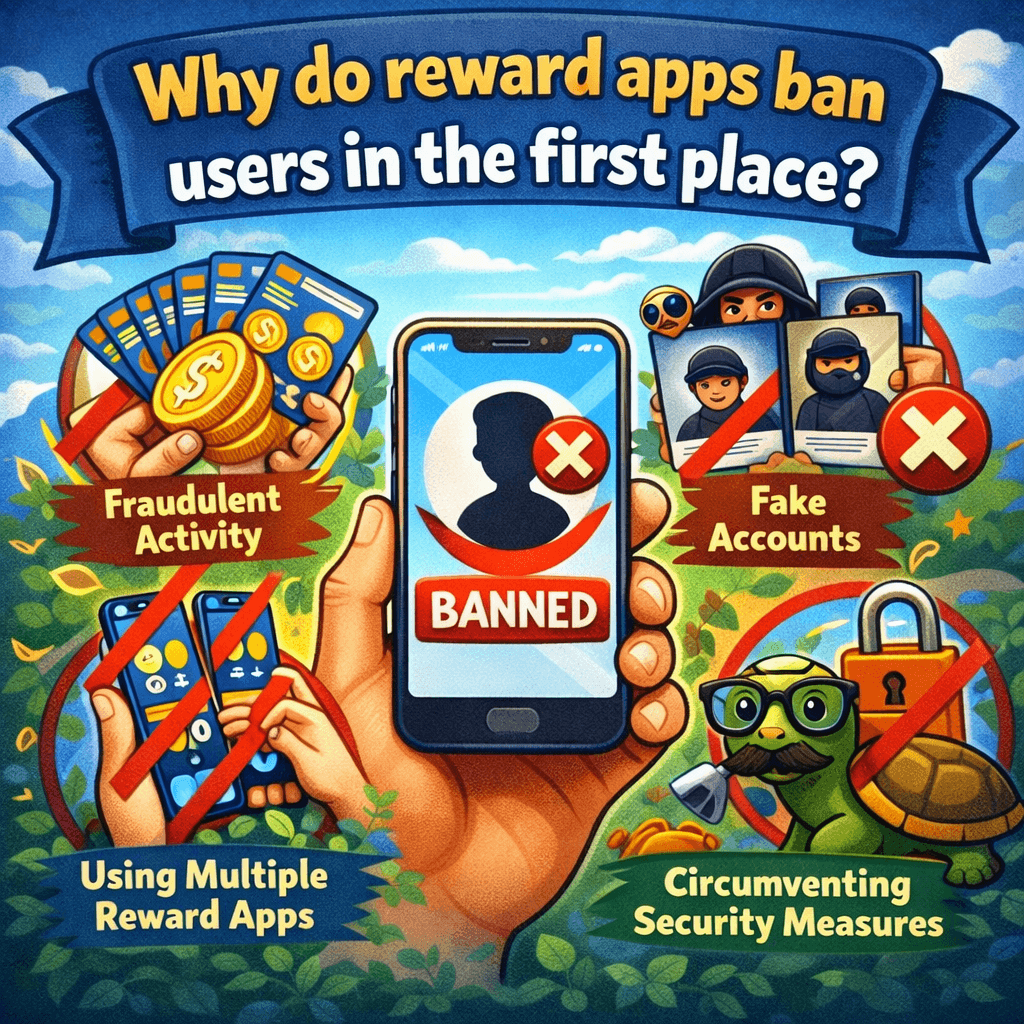
Understanding the business motivation behind bans helps you see the situation from the platform's perspective.
Advertiser relationships are everything
Reward platforms act as middlemen between users and advertisers. Advertisers pay them to deliver genuine, high-quality customers who legitimately engage with offers. When fraud occurs, fake completions, gaming the system, or generating low-quality conversions, advertisers lose money and may cut ties with the platform entirely.
From the platform's view: one advertiser relationship is worth thousands of user accounts. If they must choose between potentially banning innocent users versus risking advertiser trust, they will always protect the advertiser.
Fraud costs platforms directly
Many platforms pay users before receiving confirmation from advertisers. If a fraudulent user cashes out and the advertiser later rejects the conversion, the platform loses that money. Multiply this across thousands of users and fraud becomes an existential threat to the business.
Regulatory and legal compliance
US laws like the FTC Act, state-level consumer protection statutes, and advertising regulations require platforms to maintain quality standards. Allowing obvious fraud makes platforms liable for deceptive trade practices. Banning suspicious accounts protects them legally.
Preventing systemic gaming
If word spreads about an exploit or loophole, it can collapse an entire offer ecosystem. One user finding a way to complete the same offer repeatedly might inspire thousands to do the same, causing advertisers to pull all their campaigns. Aggressive enforcement deters this contagion effect.
What are the most common reward app suspension reasons?
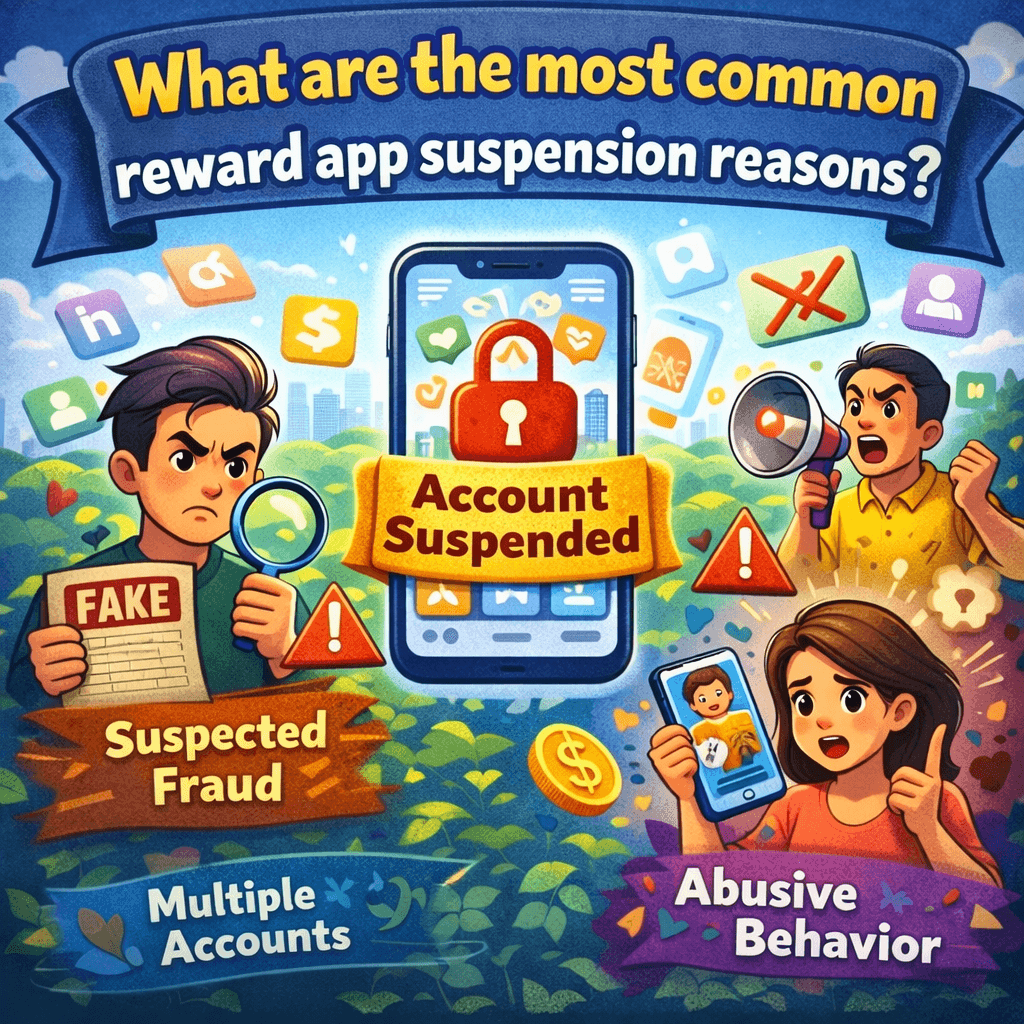
These triggers account for the majority of bans across all major platforms:
High-risk violations (immediate permanent ban)
- Creating multiple accounts under your name or household: Platforms limit one account per person, device, or household depending on their terms.
- Selling or trading accounts: Transferring accounts to other people violates terms universally.
- Using automation tools or bots: Scripts that complete offers automatically or farm points.
- Fabricating information during offer completions: Fake names, addresses, phone numbers, or payment details.
- Intentionally abusing refund or return policies: Buying items for rewards then systematically returning everything.
- Coordinated fraud schemes: Working with others to manipulate referral systems or share exploits.
Medium-risk violations (warning or temporary suspension)
- Rapid unusual activity spikes: Completing 20 offers in one day when your normal pattern is 2-3 per week.
- Geographic inconsistencies: VPN showing you in California but your shipping address is Texas.
- Excessive customer support tickets: Constantly requesting manual credit for failed offers.
- Violating offer terms repeatedly: Like completing "new customer only" offers as an existing customer.
- Using multiple devices in ways that appear suspicious: Different phones, tablets, computers with different IP addresses.
Low-risk violations (account restriction or feature limits)
- Missing email verification or identity confirmation: Failing to complete required account security steps.
- Chargebacks or payment disputes: Disputing legitimate charges related to offer completions.
- Idle accounts with high pending balances: Long inactivity before sudden cashout attempts.
- Age verification failures: Unable to prove you meet minimum age requirements (usually 18+).
Warning: You can be banned for others' actions. If someone in your household violates terms using a different account on the same wifi network, your legitimate account may get caught in the enforcement action due to IP association.
Why do multiple accounts on reward apps trigger instant bans?
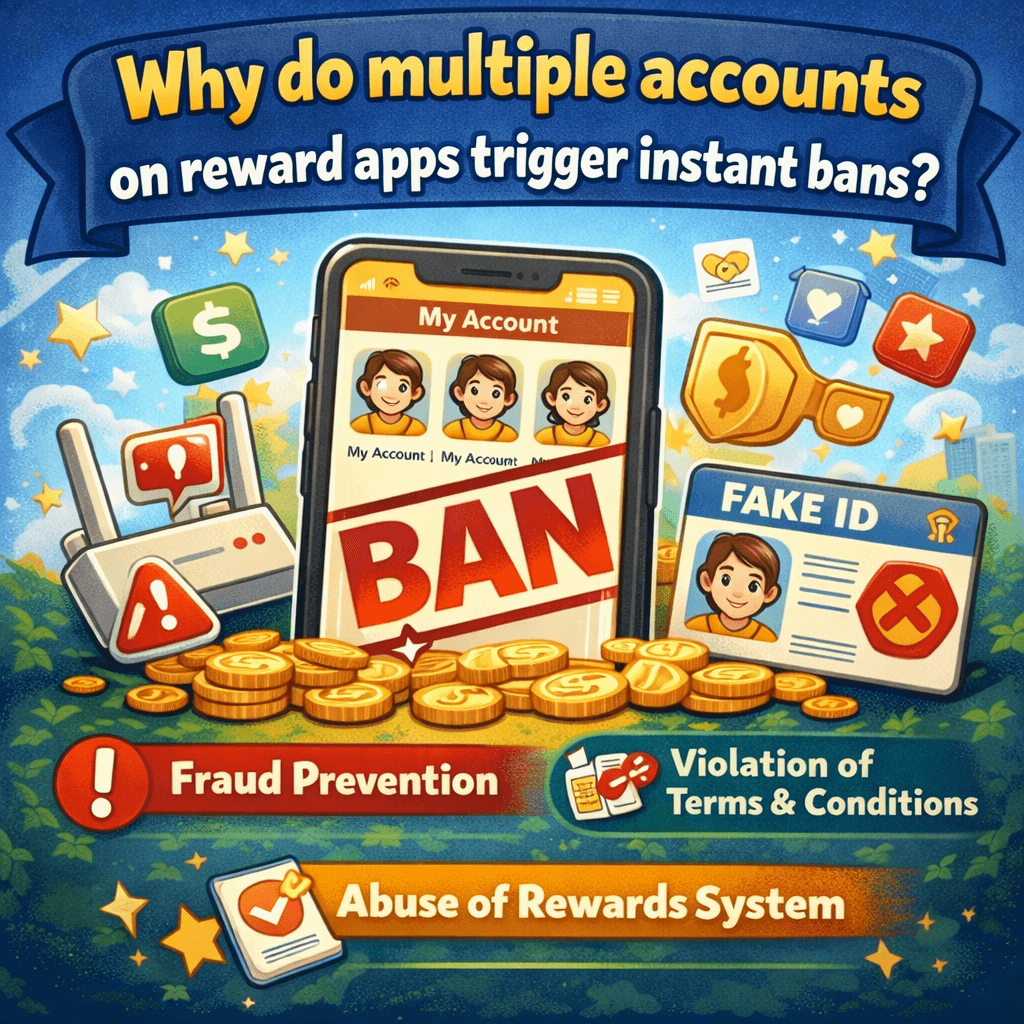
This is the single most common reason users report getting banned "for no reason", they genuinely don't realize having multiple accounts violates terms.
Why platforms prohibit this so strictly:
Reward platforms negotiate rates with advertisers based on delivering unique users. If one person creates five accounts and completes the same offer five times, they have just cost the platform 4x what they should have paid out while delivering only 1x value to the advertiser.
What counts as "multiple accounts":
- Two accounts in your name with different email addresses.
- You and your spouse each having accounts on the same wifi network (some platforms allow this, others don't, check specific terms).
- Creating a new account after forgetting your old password.
- Having an account on both the iOS and Android versions of the same app.
- Family members in the same household with separate accounts (household limits vary by platform).
How platforms detect multiple accounts:
- Device fingerprinting: Your phone has a unique identifier combination (screen size, OS version, installed apps, fonts) that persists even if you change your email or reinstall the app.
- IP address tracking: Multiple accounts logging in from the same home internet connection.
- Payment method matching: Using the same PayPal, bank account, or payment card across accounts.
- Behavioral patterns: Similar activity patterns, timing, and offer selections between accounts.
- Shared verification information: Same phone number, address, or ID documents.
The forgot password trap:
A surprisingly common ban scenario: You used a reward app years ago, forgot about it, and tried to create a "new" account with a different email. The platform detects you already have an account through device or behavioral matching and bans both accounts for terms violations.
How does suspicious activity lead to cashback app suspension?
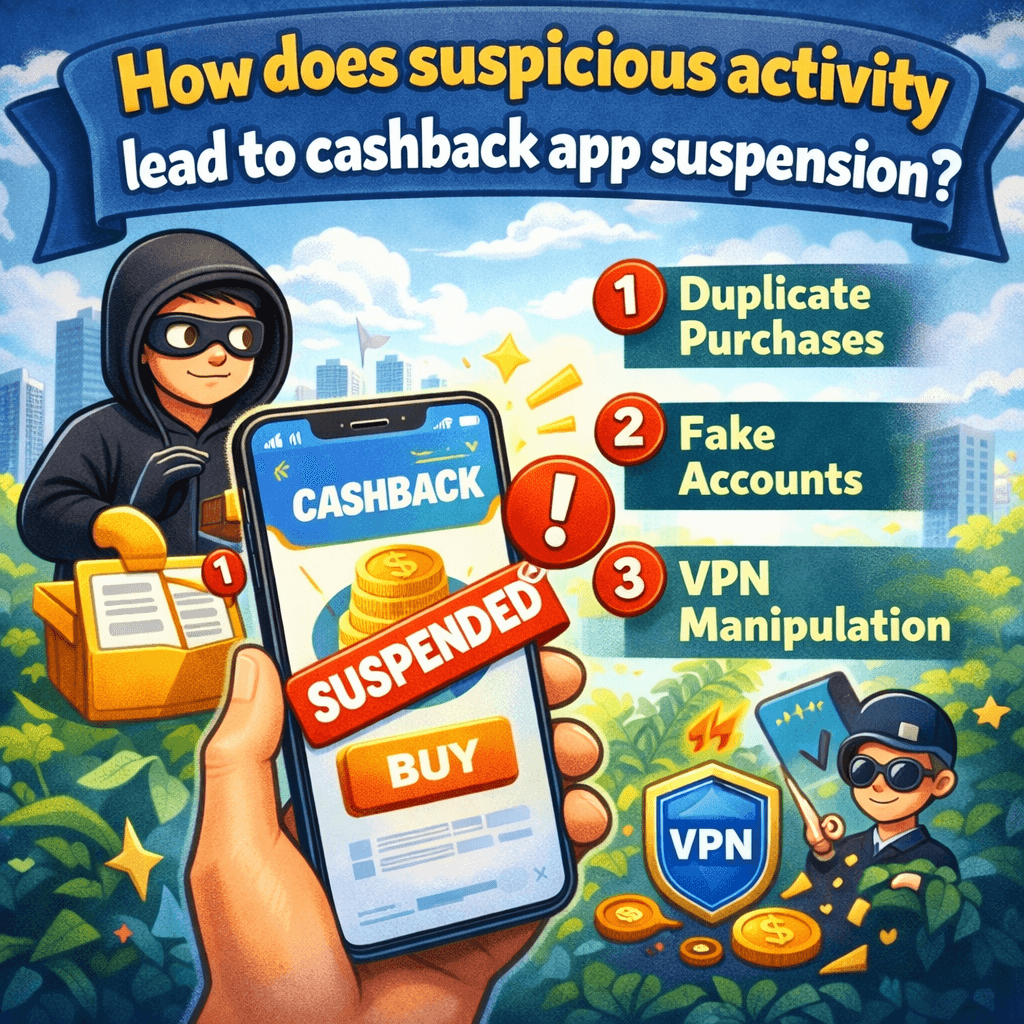
Fraud detection systems look for patterns that deviate from normal consumer behavior. Unfortunately, innocent actions can sometimes match these patterns.
Patterns that trigger fraud alerts:
The velocity problem:
Fraud systems track how quickly you complete offers. Real consumers browse, compare, read reviews, and take time deciding. Completing an offer within 2 minutes of clicking it signals potential fraud, even if you legitimately just signed up for something you already researched.
The consistency problem:
Real human behavior has natural variation. You might complete 5 offers one week, none the next, 3 the following week. Perfectly consistent patterns (like exactly 10 offers every Monday) appear bot-like.
Common mistake: Using a VPN for general privacy then forgetting to turn it off before using reward apps. Even if you are in the same country, showing different cities on successive logins can trigger geographic inconsistency flags.
What innocent behaviors accidentally trigger fraud detection?
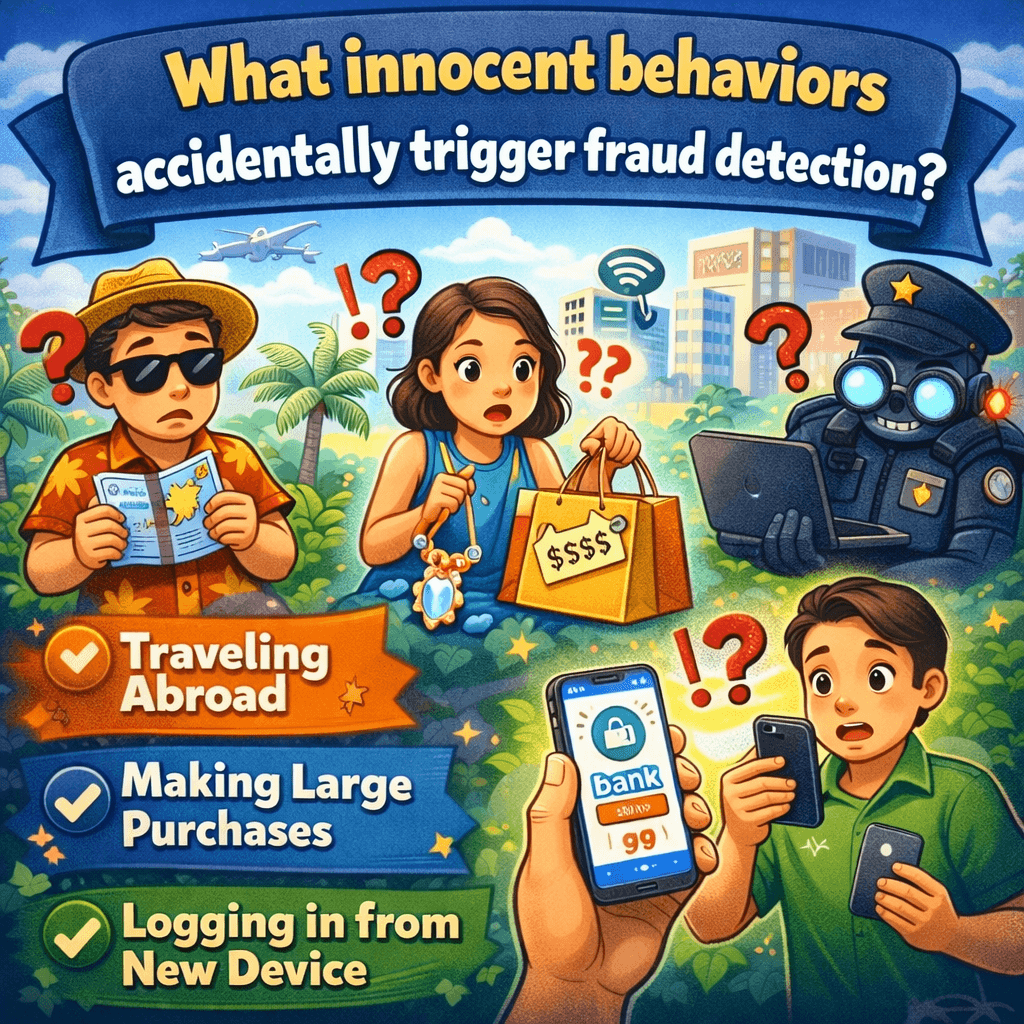
Understanding these helps you avoid false positive bans:
Sharing devices in households
Your teenager uses your tablet to complete a game offer on their account. Later, you use the same tablet for your account. The system sees two accounts on one device and flags potential account sharing or multiple accounts.
Installing apps through "wrong" sources
For app install offers, you must download through the specific tracking link. But if you already had the app installed previously, deleted it, and now reinstall through the reward app, the advertiser's system might not recognize it as a "new" install and your account gets flagged for attempting duplicate completions.
Using autopay or subscription management tools
Services like Truebill or Trim that manage subscriptions can interfere with reward tracking for trial offers. When these tools automatically cancel your trial, it might happen before the advertiser validates the conversion, triggering a fraud flag for "immediately canceling" offers.
Having common names or addresses
If you are John Smith living in an apartment complex where another John Smith also uses the same platform, overlapping information might make the system think you're the same person with multiple accounts. This is especially problematic with common surnames and high-density housing.
Traveling frequently for work
Logging in from airports, hotels, and different cities creates geographic inconsistency. Add in using airport wifi or VPNs on public networks for security, and your legitimate travel pattern starts looking like account sharing across locations.
Buying multiple unrelated products quickly
During major sales events (Black Friday, Prime Day), you might legitimately complete 10 different shopping offers in one day buying gifts. This volume, combined with unrelated categories (tools, cosmetics, electronics), can trigger alerts for "too good to be true" shopping patterns.
Can you get your reward app account unbanned?
Success rates for appeals vary dramatically by platform and violation type.
Situations where appeals often succeed:
- False positive device/IP matches: You can prove through documentation that you are a distinct person from whoever else was flagged.
- Temporary technical errors: The platform's system glitched and incorrectly processed your activity.
- Misunderstandings about household rules: First offense where you genuinely didn't know spouses couldn't both have accounts.
- Identity verification issues: You can provide better documentation proving your identity and address.
Situations where appeals rarely succeed:
- Multiple accounts confirmed: Even if created accidentally, platforms almost never reverse these bans.
- VPN usage: Considered an intentional deception regardless of your privacy motivations.
- Violated advertiser terms: If you weren't actually a "new customer" and completed that offer anyway.
- Pattern-based bans: When your behavioral pattern matches known fraud, even if each individual action was legitimate.
How can I avoid getting my account restricted in the first place?
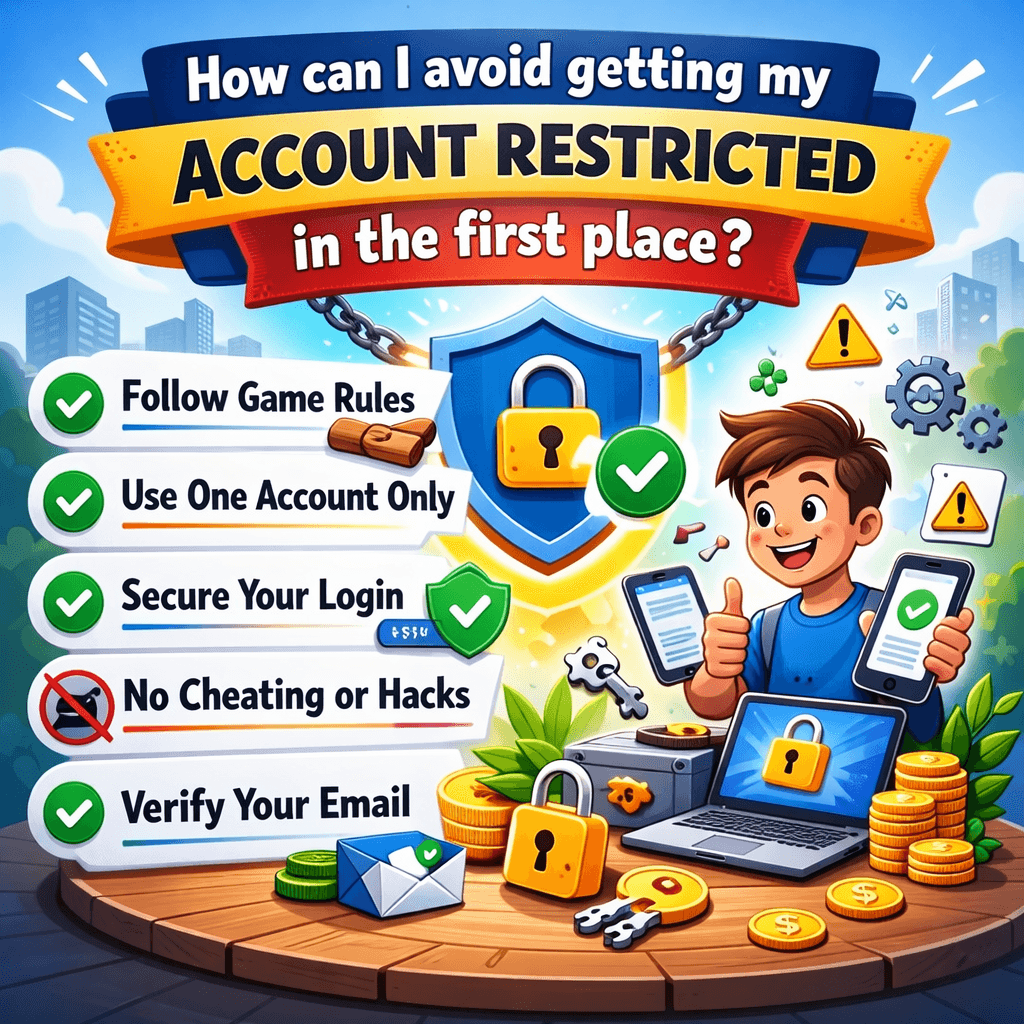
Prevention is exponentially easier than appeals. These habits protect your account:
Safe usage checklist for high-value offers
Before completing any offer worth $25 or more:
- Confirm you meet eligibility requirements (new customer, age, location, etc.).
- Verify you are on your normal device and wifi network.
- Check that no VPN or privacy tools are active.
- Read the advertiser's terms, not just the reward app's description.
- Plan to maintain the subscription or keep the item long enough to pass validation.
- Screenshot the offer terms and your completion confirmation.
- Set a calendar reminder to check the status within the expected crediting window.
What should I do if my cashback app banned my account without reason?
This frustrating scenario, getting banned with no explanation, happens more often than platforms admit. Here is your action plan:
Immediate steps (within 24 hours):
Step 1: Document everything
- Take screenshots of the ban message exactly as it appears.
- Export or screenshot your complete account history if still accessible.
- Save any emails from the platform about your account status.
- Note the exact date and time you discovered the ban.
Step 2: Check for pending balance
- Determine how much money is in your account.
- Review which rewards were pending vs. approved.
- Calculate total potential loss.
Step 3: Review your recent activity
- List every action you took in the past 30 days.
- Note any unusual circumstances (traveled, used different device, etc.).
- Check if anyone else in your household uses the platform.
- Consider whether you clicked anything suspicious or granted app permissions you shouldn't have.
Are there differences between why GPT apps vs. traditional cashback apps ban accounts?
Yes, different platform types have distinct vulnerability points and ban triggers.
Traditional cashback/offer apps:
These platforms primarily care about advertiser conversion quality and preventing duplicate completions. Bans focus on:
- Multiple accounts to repeat high-value offers.
- VPN usage to access geo-restricted deals.
- Systematic refunding after cashback credits.
- Violating "new customer only" restrictions.
Get-paid-to (GPT) apps and survey platforms:
These have additional vulnerabilities around task quality and response authenticity:
- Survey speeding: Completing surveys too quickly suggests not reading questions.
- Inconsistent demographic answers: Saying you are 25 in one survey and 45 in another.
- VPN detection: Extremely sensitive because advertisers pay different rates by country.
- Quality score declines: Too many failed attention checks or screener disqualifications.
- IP sharing: Multiple accounts completing surveys from the same location.
Gaming reward apps:
Focus on preventing automation and fake gameplay:
- Impossible achievement speeds: Reaching level 50 in a game that takes most users weeks.
- Botting patterns: Perfect gameplay statistics that indicate automated play.
- Emulator detection: Running mobile games on PC to automate.
- Modified APKs: Using altered game files to bypass requirements.
The common thread: every platform type optimizes their detection for their specific vulnerability. Understanding what your platform type cares about most helps you avoid their primary triggers.
Safer Habits That Prevent Account Bans
1. Use One Primary Device Consistently
Why this matters: Platforms create a unique "fingerprint" for your device based on screen size, operating system, installed apps, and dozens of other characteristics. When you log in from different devices frequently, the system can't tell if it is you using multiple devices or if your account is being shared/compromised.
How to do it:
- Choose one smartphone or tablet as your primary reward device.
- Complete 80-90% of all offers on this same device.
- If you occasionally need to use a laptop, limit it to 1-2 times per month.
- Never log into your account on someone else's device, even to "show them how it works".
What triggers flags: Logging in from 3+ different devices in one week, or alternating between devices daily. The system interprets this as potential account sharing between multiple people.
2. Never Use VPNs or Proxy Services
Why this matters: VPNs mask your real location, which prevents platforms from verifying you are in your stated region. Advertisers pay different rates based on geography and restrict offers by location. When platforms detect VPN usage, they can't distinguish between "I am privacy-conscious" and "I am trying to access restricted higher-paying offers fraudulently." Both look identical to fraud detection systems.
How to do it:
- Completely disable or uninstall VPN apps (NordVPN, ExpressVPN, Surfshark, etc.) from devices you use for rewards.
- Check browser extensions, some have built-in VPNs (Opera browser has VPN features).
- If you must keep VPN for other uses, set up split-tunneling to exclude reward apps specifically.
- When on public WiFi, switch to mobile data for reward app usage instead of using VPN.
What gets detected: Even "stealth mode" VPNs get caught through IP datacenter detection, timezone mismatches (VPN shows Netherlands but device timezone is US Pacific), DNS leaks, and WebRTC IP exposure.
3. Only Complete Offers You Genuinely Qualify For
Why this matters: When you complete "new customer only" offers as an existing customer, advertisers detect this during validation through their customer databases. They report the fraudulent conversion to the reward platform, flagging your account. Multiple violations result in permanent bans. Advertisers track emails, phone numbers, addresses, and device fingerprints, they know if you have used their service before even if you create a new account.
How to do it:
Before clicking any offer, verify these 5 things:
- Am I actually a new customer? (Never used this company before, not even years ago).
- Am I in the correct state/region for this offer?.
- Do I meet age requirements? (Most require 18+, some 21+).
- Can I meet the spend minimum authentically? (If it requires $50, don't try to qualify with $49).
- Have I used any sister companies? (Uber/UberEats, Hulu/Disney+ often share databases).
- When uncertain: Skip the offer entirely. One $30 missed opportunity is better than account termination.
The gray area trap: Don't assume "it is been 3 years, they probably deleted my account", customer databases persist indefinitely, and advertisers actively check against them.
4. Wait 7-14 Days Before Canceling Trial Subscriptions
Why this matters: Platforms track how quickly you cancel trials after rewards credit. If you consistently cancel within 24-48 hours of rewards posting, it proves you never intended to be a real customer, you are just extracting rewards. This pattern is called "trial abuse" and triggers immediate fraud investigations. Advertisers also share engagement data showing whether you actually used the service or just signed up and ignored it.
How to do it:
- When completing trial offers, set a calendar reminder for 30 days out (the end of the trial).
- If you decide not to continue, cancel at 10-14 days minimum, never immediately after the reward credits.
- Actually use the service 2-3 times during the trial (watch shows, use features, log in).
- Even better: only sign up for trials you might genuinely continue
Why these specific timeframes work: Real consumers take 7-14 days to evaluate whether they like a service. They try features, use it a few times, then decide. Reward farmers cancel the instant rewards post (often within hours), showing zero genuine interest.
What advertisers track and report:
- Account created: ✓
- Logged in after signup: ✓ (4 times)
- Content consumed: ✓ (8 hours over 11 days)
- Cancellation: Day 12
vs.
- Account created: ✓
- Logged in after signup: ✗ (never)
- Content consumed: ✗ (0 minutes)
- Cancellation: Day 1
The second pattern gets reported as fraud.
5. Follow the 90-Day Gradual Growth Pattern
Why this matters: New accounts face the most intense scrutiny because that is when fraud attempts typically occur. Platforms expect gradual activity increases as legitimate users discover features and get comfortable. Sudden activity spikes (going from 2 offers to 20 offers overnight) match the pattern of experienced fraudsters who know exactly how to maximize earnings quickly before getting caught.
How to do it:
Month 1 Foundation Phase (8-12 total offers):
- Week 1: Complete 2-3 low-value offers (surveys, small purchases under $10).
- Week 2-4: Gradually increase to 2-3 offers per week.
- Focus on smaller offers that credit quickly to build success history.
- Avoid contacting support for manual credits
Month 2 Trust Building (12-16 total offers):
- Increase to 3-4 offers per week consistently.
- Start attempting medium-value offers ($15-30 range).
- Make your first small withdrawal ($10-25) to prove you are legitimate.
- All or most offers should credit automatically without support intervention
Month 3+ Established User (15-20 offers per month):
- Maintain steady 3-5 offers weekly with natural variation.
- Now safe to attempt higher-value offers ($50+).
- Your 90-day history provides protection against occasional anomalies.
- Can occasionally deviate from patterns without triggering flags
Wrapping up
The uncomfortable truth about reward app bans is that the platforms optimize for advertisers, not users. Your individual account represents minimal value compared to maintaining trust with brands paying for conversions. This power imbalance means you must work harder to prove you are legitimate than the platform works to verify ban accuracy.
But understanding this dynamic gives you power. When you recognize that your behavior is constantly evaluated against fraud patterns, you can consciously build a usage profile that clearly signals "real consumer" rather than "potential fraudster."
The users with the longest-lived, highest-earning accounts share common traits: consistent but moderate activity, genuine engagement with diverse offer types, professional communication with support, clean technical hygiene (no VPNs, stable devices), and careful documentation. They treat reward apps as long-term supplemental income sources rather than short-term exploitation opportunities.
The key is thinking like the fraud detection system: if your pattern would look suspicious from the outside, even though you know your intentions are pure, adjust the pattern rather than hoping the system understands context it cannot see.
